Audi Q4 e-tron Sportback Leasing

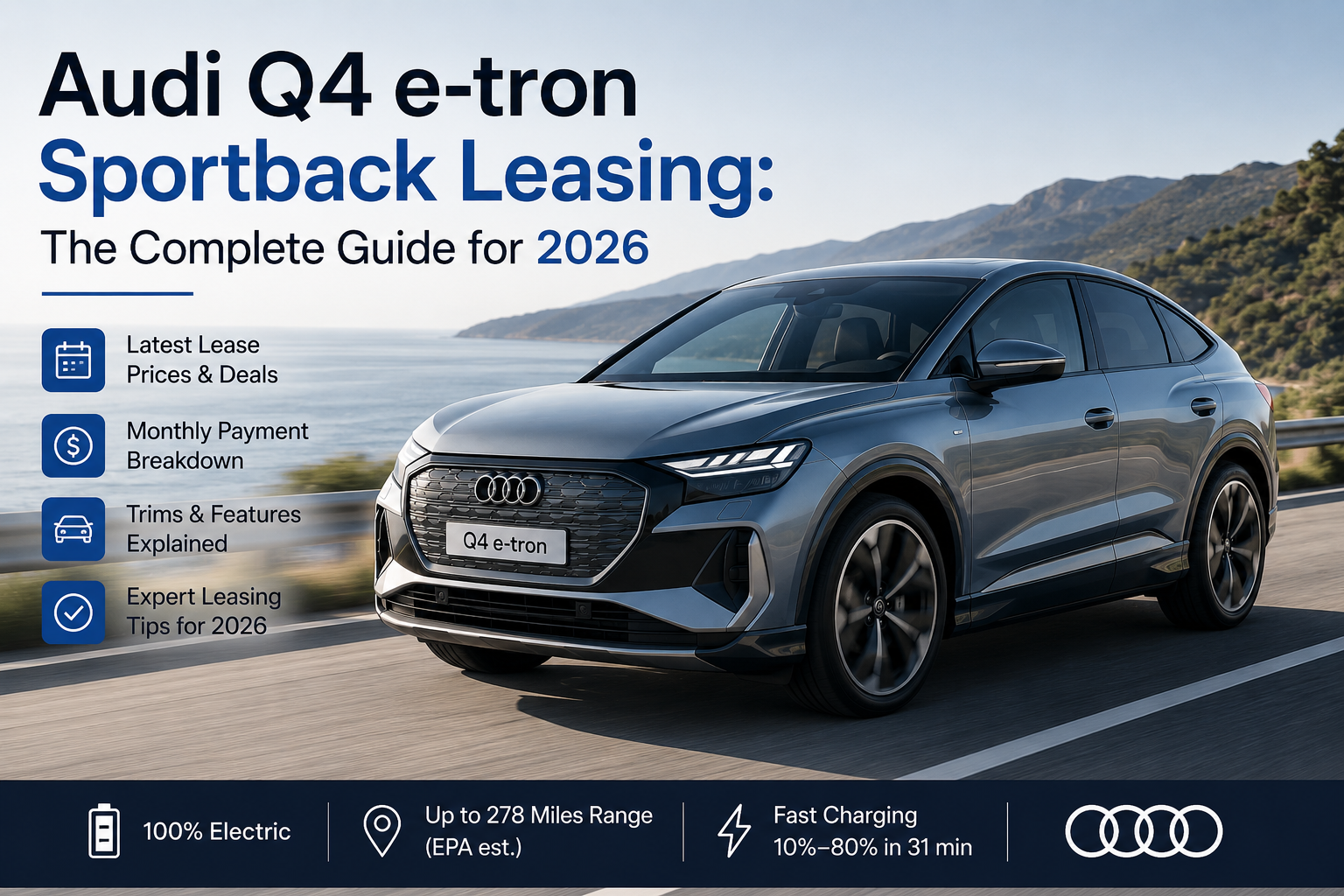
Audi Q4 e-tron Sportback Leasing: The Complete Guide for 2026
If you’ve been cross-shopping electric SUVs for a while, chances are the Audi Q4 e-tron Sportback has already caught your eye. That sloped roofline, the quattro badge, Audi’s usual interior polish – it’s an easy car to want. But wanting it and actually understanding what you’re signing up for on a lease are two different things, and dealerships aren’t always in a hurry to walk you through the difference.
This guide is meant to fill that gap. Not a sales pitch, not a spec sheet rehash – just a straightforward look at how leasing this specific car works, what actually pushes your payment up or down, and where people tend to get caught out.
What Is the Audi Q4 e-tron Sportback?
Think of it as the coupe version of Audi’s regular Q4 e-tron SUV. Same MEB electric platform underneath (shared with a few other Volkswagen Group EVs), same flat floor and low center of gravity, battery packs tucked away under the cabin instead of chewing into your trunk space. Audi offers it across a few trims, and you’re basically choosing between a single-motor rear-wheel-drive setup or the dual-motor quattro version, which is noticeably quicker off the line.
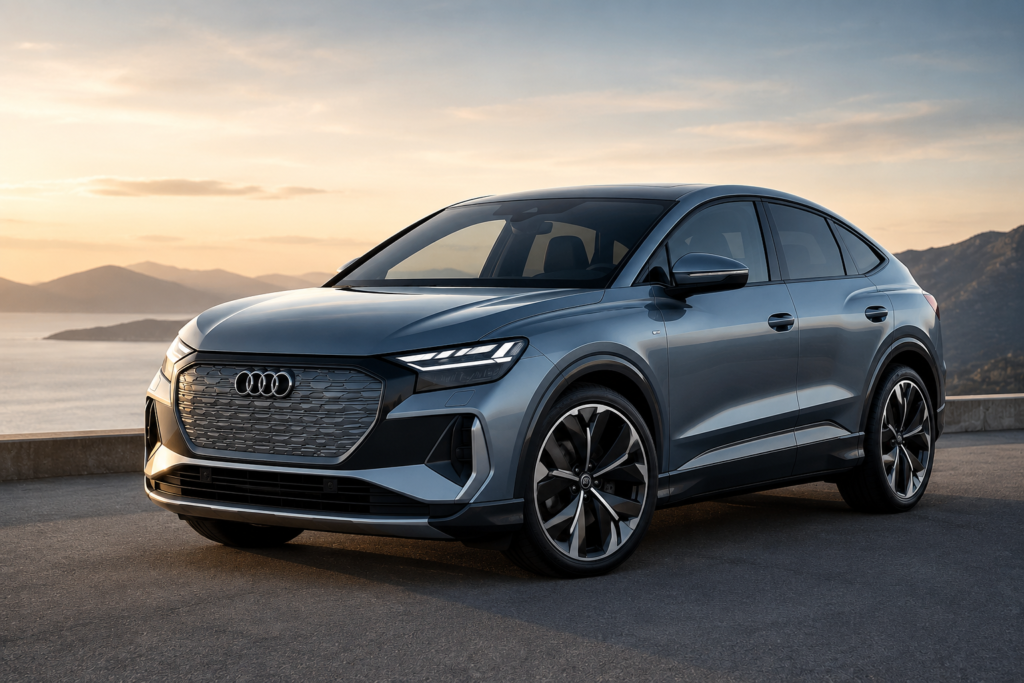
What you’re really giving up compared to the standard Q4 e-tron is some headroom and cargo room in the back. That’s the trade-off with any “coupe SUV” body style – BMW’s X4 does the same thing, so does the Mercedes GLC Coupe. My honest advice? Sit in both body styles before you decide. The headroom difference reads a lot bigger in person than it does on a spec sheet.
Why People Lease EVs Instead of Buying Them Outright
Leasing has always suited a certain kind of driver – someone who likes a new car every few years and doesn’t want to deal with resale later. EVs add a couple more reasons on top of that.
Battery tech keeps moving. Range, charging speed, efficiency – all of it has improved meaningfully over the last few model years, and a three-year lease means you’re not stuck with a pack that feels dated by year four. There’s also the depreciation question. Some EVs have held their resale value badly as new models and price cuts hit the market, and honestly, nobody can predict with certainty where used EV prices land in three years. Leasing hands that risk to the leasing company instead of you.
Warranty timing works out nicely too – a standard 36-month lease usually keeps you inside Audi’s bumper-to-bumper and battery coverage the whole time, so fewer surprise repair bills. And the monthly payment itself tends to run lower than financing the same car, since you’re only paying for the depreciation during your lease term, not the full purchase price.
None of this makes leasing automatically the smarter move for every driver. It depends a lot on how many miles you actually put on a car each year, and whether owning something outright matters to you.
How the Lease Payment Actually Gets Calculated
Nobody explains this well at the dealership, which is part of why lease math confuses so many people. At its core, three things build your monthly number:
Depreciation is the biggest piece – the gap between the negotiated price of the car (the cap cost) and what it’s projected to be worth at lease-end (the residual value), spread out over your term. Then there’s the rent charge, sometimes called the money factor, which is essentially the interest cost baked into the lease. Multiply it by 2,400 and you get something close to an equivalent APR. Finally, taxes and fees get added on, and these vary a lot by state – sometimes they’re rolled into the payment, sometimes due upfront.
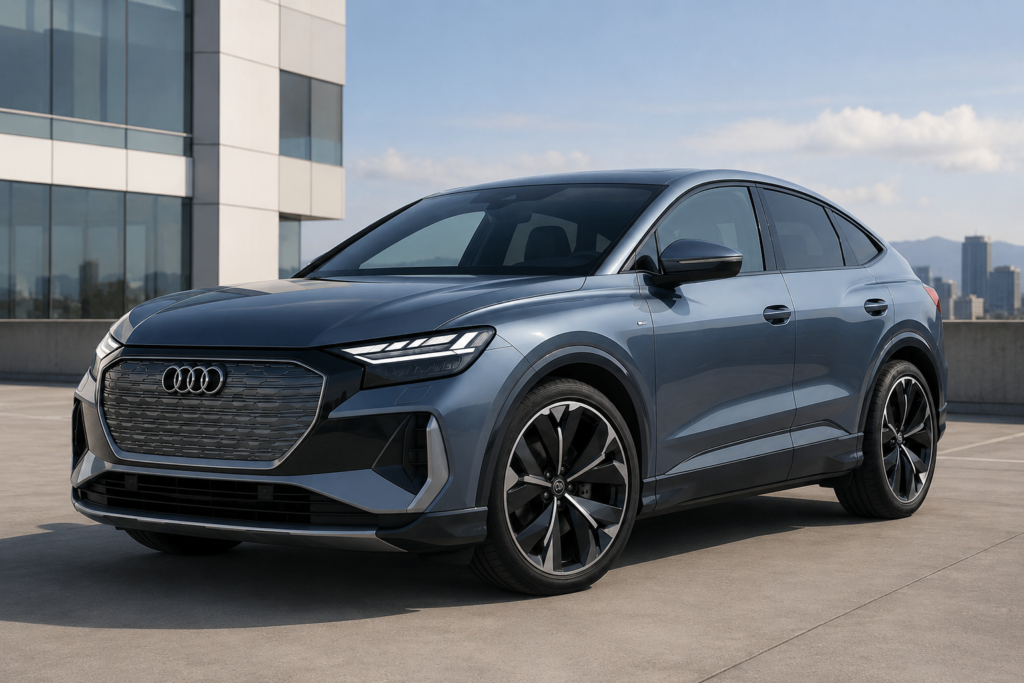
Residual value matters more for EVs than it does for a gas car, because manufacturers set those projections based on how fast they expect a specific model to lose value. A car with a strong residual projection leases cheaper per month than one with a weaker projection, even at an identical sticker price. This is exactly why the same Q4 e-tron Sportback can look like two completely different deals depending on the month or the region – residuals and incentives shift more often than most shoppers realize.
Trim Levels and What They Do to Your Payment
Audi generally splits the Sportback lineup into three groups. Premium covers the essentials – the safety tech and features most people expect as standard now. Premium Plus adds better infotainment, more driver-assist features, usually bigger wheels. Prestige goes all in, with the full options list including upgraded sound and more advanced lighting.
Higher trims cost more to lease, obviously, but not always in a straight line – residual percentages can differ trim to trim, which sometimes narrows the payment gap more than you’d expect. Get quotes on two or three trims side by side before assuming the middle option is the “smart” choice. Sometimes it isn’t.
Lease or Loan – Which One Actually Fits You
A few honest questions tend to sort this out faster than any calculator:
How many miles are you really driving each year? Most Q4 e-tron Sportback leases cap you somewhere between 7,500 and 12,000 miles annually, and going over triggers a per-mile fee that adds up fast. If you’re a high-mileage driver, financing is usually the better call.
Do you actually want to own the car eventually, or does that not matter much to you? Financing builds equity over time. Leasing doesn’t – you’re just renting depreciation. If ownership matters, a loan (or a lease you plan to buy out at the end) makes more sense.
How much do you value flexibility? Leasing keeps the door open every few years, which is worth something if EV tech, charging networks, or your own driving needs are likely to shift.
And beyond all that – have you actually run the numbers both ways? Total lease cost against total loan cost, factoring in projected resale value, not just whichever option has the smaller monthly payment. Sites like Edmunds and Kelley Blue Book both have lease-versus-buy calculators worth running with your actual figures before you decide either way.
What Happened to the Federal EV Tax Credit on Leases
This is where a lot of outdated information is still floating around, so let’s be precise about it. For a while, plenty of EV leases benefited from a federal incentive tucked into Section 45W of the tax code – people called it the “lease loophole.” The leasing company, not the driver, would claim a commercial clean vehicle credit and pass some of that savings through as a lower monthly payment.
That ended for any lease signed after September 30, 2025, once the 2025 federal tax legislation took effect. Vehicles acquired after that cutoff no longer qualify the leasing company for the 45W credit, and the related consumer credits under Sections 30D and 25E disappeared on the same timeline. So if you’re leasing a Q4 e-tron Sportback right now, don’t expect a federal credit quietly baked into your payment the way it might have been a year or two ago.
That said, incentives haven’t vanished completely – state rebates, utility company EV programs, and manufacturer lease cash still show up in a lot of markets and change fairly often. The IRS Clean Vehicle Tax Credits page is the most reliable place to check current federal rules, and honestly, just asking your dealer directly whether any state or regional incentive applies is worth the two minutes it takes.
Before You Sign – What’s Worth Reading Twice
A lease is a legal contract, not just a monthly number on a sticker. Slow down and check a few things before you sign anything.
Mileage allowance and the overage fee that comes with going past it – confirm the cap actually matches how you drive, not a hopeful guess. There’s usually a disposition fee too, a few hundred dollars charged at lease-end if you don’t buy the car or roll into another Audi lease. The wear-and-tear clauses are worth a close read as well, since what counts as “normal” wear versus chargeable damage can get interpreted pretty loosely by the leasing company at inspection time.
Don’t skip the acquisition fee (a one-time charge, sometimes upfront, sometimes folded into the cap cost) or the early termination terms – if life changes and you need out of the lease before it ends, those penalties can be steep, and it’s much better to know the number now than to find out later. Gap coverage matters too. Confirm whether it’s already built into the lease or something you need to buy separately, since it’s what protects you if the car’s totaled and you owe more than it’s actually worth.
Both Car and Driver and J.D. Power keep fairly current explainers on lease terminology, if you want a plain-English refresher before your appointment.
Insurance on a Leased Q4 e-tron Sportback
Leasing companies almost always ask for higher coverage limits than your state’s bare minimum – comprehensive and collision for the full lease term, gap coverage in a lot of cases too. And because the leasing company technically owns the car, your policy needs to list them as an additional interested party or loss payee. It’s a small detail that trips people up more often than you’d think, usually right at signing when nobody wants a delay.
Premiums on the Q4 e-tron Sportback can run a bit higher than a comparable gas SUV – EV parts and battery repairs simply cost more to source. Get insurance quotes before you lock in your lease terms, not after, since that monthly premium is a real part of what this car costs you to drive, not some afterthought. It’s worth taking the time to compare car insurance quotes across a few providers, since coverage requirements for leased EVs aren’t identical from one insurer to the next.
Getting a Better Deal
A handful of habits separate the good lease deals from the mediocre ones. Get quotes from more than one dealer – pricing on the exact same trim can swing more than the gap between two different trims at a single store, since money factor and residual support aren’t handled identically everywhere. Negotiate the cap cost itself, not just the payment number on the page. Dealers will sometimes hand you an attractive monthly figure while quietly stretching the term or lowering what’s due at signing, and it ends up costing more over the life of the lease.
Keep an eye out for manufacturer specials too – Audi Financial Services runs promotional money factors or lease cash on certain trims now and then, often near the end of a model year. Shopping right as a refreshed model gets announced can work in your favor, since outgoing inventory often picks up stronger incentives. And don’t just default to 36 months because that’s what everyone does – a 24-month term makes sense if you think EVs are about to take another real leap forward, while a 48-month term can bring the payment down if you’re fine holding onto the car a bit longer.
Mistakes First-Time EV Lessees Tend to Make
Home charging costs get underestimated a lot – cheaper than gas, sure, but not free, and it depends heavily on your local electricity rates. Annual mileage is another one; people lease based on last year’s commute and then quietly take on a longer one without adjusting the cap. It’s also worth actually testing public charging speed and availability in the areas you drive day to day, rather than trusting the spec sheet.
The wear-and-tear addendum deserves a proper read too, particularly around wheels, tires, and interior trim – those are where lease-end disputes happen most. And a lot of people still walk in assuming the old lease tax credit applies. It doesn’t anymore, so ask about it upfront rather than finding out at signing that the number you budgeted for isn’t there.
Frequently Asked Questions
Is leasing cheaper than buying an Audi Q4 e-tron Sportback?
On a monthly basis, usually yes – you’re only financing the depreciation, not the full price of the car. Over a longer stretch, buying can end up cheaper if you plan to keep the car well past a typical loan term, since at some point you stop paying while a lessee is signing a new lease.
Can I still get a federal tax credit on a Q4 e-tron Sportback lease?
Not under the program a lot of people heard about. That pathway closed for vehicles acquired after September 30, 2025. Worth checking current IRS guidance and asking your dealer whether any state, utility, or manufacturer incentive still applies where you live.
What mileage limit should I actually pick?
Base it on your real driving, not a guess. Pull up the last twelve months on your odometer if you can, and build in a little buffer instead of grabbing the lowest tier just to shave a few dollars off the monthly payment.
What if I go over the mileage limit?
You’ll owe a per-mile fee at lease-end – typically somewhere between 15 and 30 cents a mile, depending on the leasing company. It’s almost always cheaper to negotiate a higher allowance at signing than to pay overage charges down the road.
Do I need special insurance for a leased EV?
You’ll need coverage that meets the leasing company’s minimums, which run higher than your state’s legal floor, plus the leasing company listed as a lienholder or additional interested party. Confirm this with your insurer before your signing appointment – not after.
Can I buy the Q4 e-tron Sportback at the end of my lease?
Usually, yes. Your agreement will spell out a buyout price set at signing, based on the residual value. Whether it’s a good deal comes down to what the car’s actually worth on the used market at that point versus that fixed number.
Final Thoughts
Leasing an Audi Q4 e-tron Sportback can be a genuinely smart way to drive a well-built electric SUV without taking on the depreciation risk that comes with owning an EV right now. It tends to work best for drivers with fairly predictable mileage, a preference for driving something new every few years, and no strong pull toward building equity in the car.
The stuff that actually matters – mileage caps, money factor, residual value, insurance requirements, and where EV incentives actually stand today – is all either negotiable or at least worth confirming before you sign anything. Take the time to compare a few dealer quotes and read the lease agreement properly. It tends to pay off many times over across the life of the lease.